Top 6 Types Of Marmots In North America: A Simple Field Guide
Marmots in North America are often overlooked, yet they play a crucial role in the ecosystems of alpine and prairie regions. These charming, burrowing mammals are not just cute; they provide valuable insights into environmental health and serve as a key food source for various predators.
Predators like weasels rely on marmots as a seasonal food source, and our guide to animals like weasels covers more of the sharp-eyed hunters sharing these same habitats.”
This field guide will delve into the fascinating types of marmots found across the continent, equipping readers with the knowledge to identify and appreciate these unique animals.
Marmots Of North America: The Basics
When people say “North American marmot,” they usually mean one of the six marmot species that live in North America. (One of them, the woodchuck, is the marmot most people see in backyards.) The National Park Service notes there are six species in North America.
Types Of Marmots In North America
- Woodchuck (Also Called Groundhog)
- Yellow-Bellied Marmot
- Hoary Marmot
- Olympic Marmot
- Alaska Marmot
- Vancouver Island Marmot
Woodchuck (Groundhog)
The woodchuck is the most widespread marmot in North America and the one most people meet in towns and farmland edges.
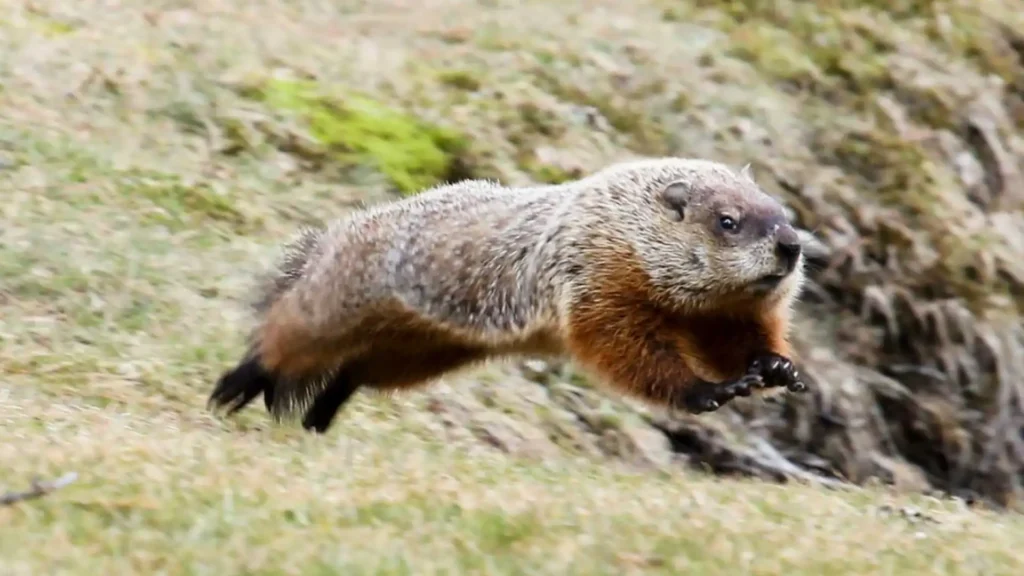
Quick ID clues: stocky body, short legs, blunt face, and a solid “I live in a burrow and I’m not sorry” attitude. That refuse-to-budge attitude isn’t unique to woodchucks — plenty of other species share it, and our list of the most stubborn animals rounds up the most hard-headed characters in the wild. “Woodchucks are usually more solitary than the high mountain species.
If you’re curious how woodchucks stack up against their burrowing cousins, our guide to animals like groundhogs breaks down the lookalikes and closest relatives worth knowing.
Where you’ll see it: fields, woodland edges, road cuts, and backyard gardens.
Yellow Bellied Marmot
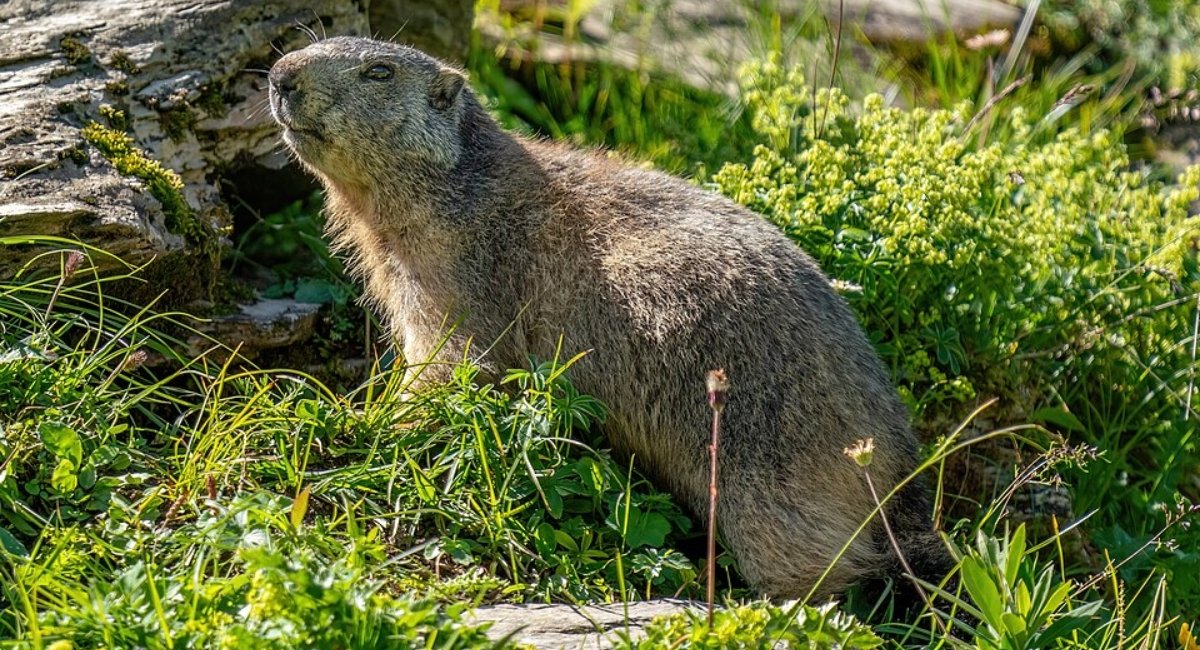
Yellow-bellied marmots are classic western mountain marmots. They often live in colonies on rocky slopes and open meadows.
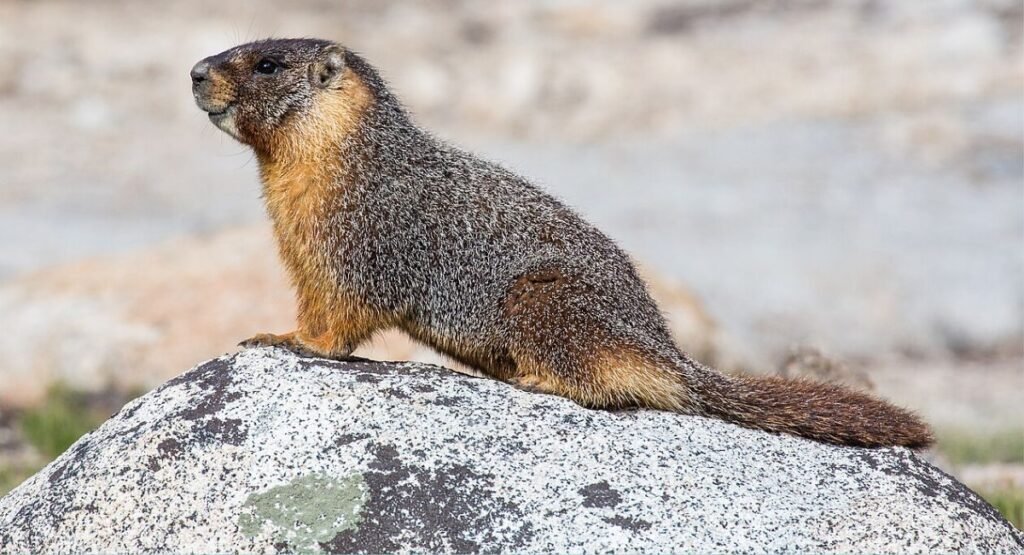
Quick ID clues: warm brown fur, a lighter belly (often yellowish), and lots of sunbathing on rocks. They’re one of the marmots you’ll see sitting upright like a little lookout. That upright, on-alert posture is a sign of real curiosity, and yellow-bellied marmots aren’t alone in it; see our roundup of the most curious animals for more inquisitive creatures worth watching.”
Where you’ll see it: the western United States and parts of western Canada, usually around open, rocky habitat.
Hoary Marmot
Hoary marmots are big, mountain living marmots with fur that can look frosted or “hoary” from a distance.
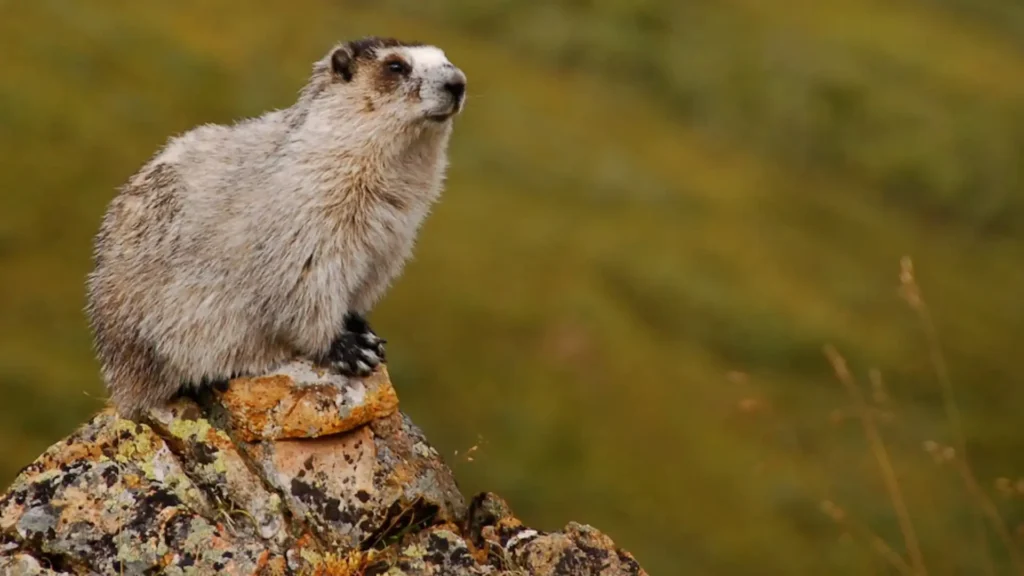
Quick ID clues: larger size, grizzled looking coat, and living in higher, cooler terrain. They often use rocks as lookouts and can be surprisingly bold around trails.
A quick scientific note: some hoary marmot populations have shown steep declines tied to changing winter conditions and reduced snow insulation.
Where you’ll see it: mountainous regions of the northwest, including parts of Alaska and western Canada, and into the northern U.S. mountains.
Olympic Marmot
The Olympic marmot is a local celebrity because it is endemic to Washington’s Olympic Peninsula.
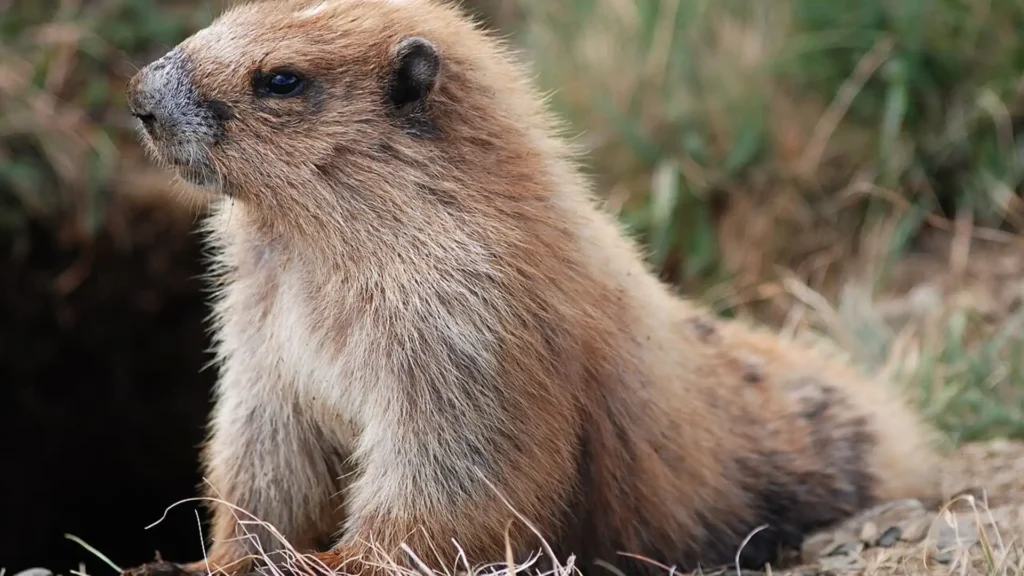
Quick ID clues: very social behavior, lots of vocalizing, and colonies in mountain meadows.
Where you’ll see it: Olympic National Park and nearby Olympic Mountains habitat.
Alaska Marmot
The Alaska marmot (sometimes called the Brooks Range marmot) lives in far northern, rocky landscapes.
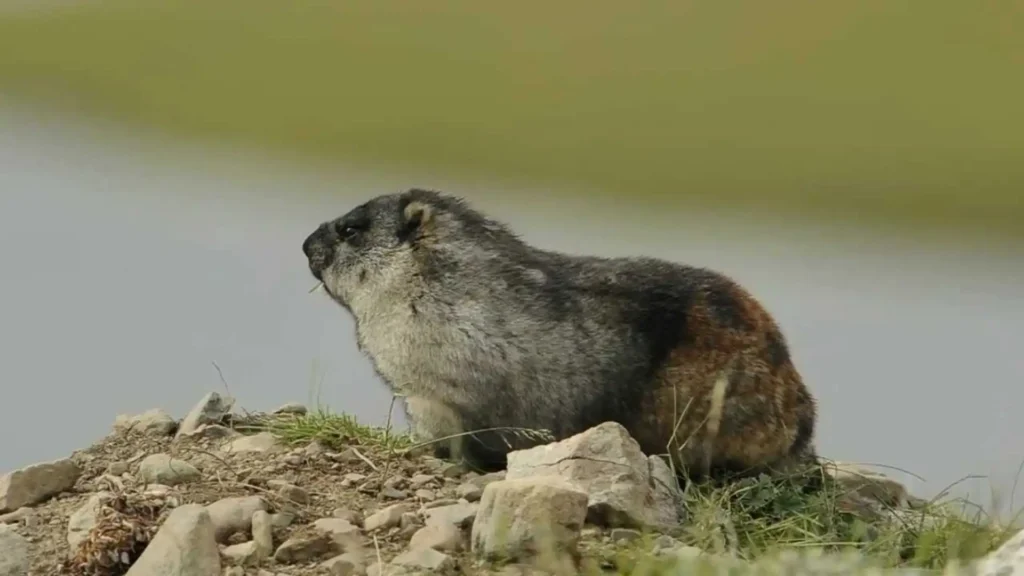
Quick ID clues: darker tones on the head and a rugged, boulder field lifestyle.
Where you’ll see it: northern Alaska, usually in remote mountain terrain.
Vancouver Island Marmot
The Vancouver Island marmot is the rarest and most range restricted North American marmot. It naturally occurs only on Vancouver Island in British Columbia.
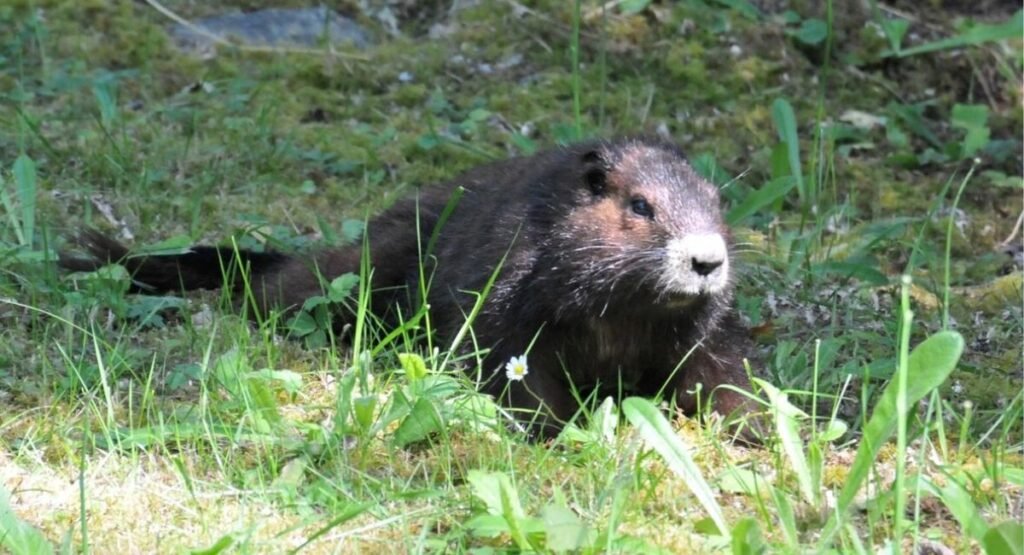
Quick ID clues: rich brown fur and a very limited range. It’s also a major conservation success story thanks to breeding and reintroduction programs.
Where you’ll see it: high mountains on Vancouver Island.
Read also Top 16 Animals That Whistle: Surprising Creatures That Communicate with Sound
How To Tell Them Apart Fast
If you’re building an ID habit, don’t focus on tiny differences first. Focus on the big picture:
- Location: which region are you in?
- Elevation: backyard, foothills, or alpine meadow?
- Social behavior: one animal or a whole neighborhood?
- Fur tone: warm brown, frosted gray, or dark capped?
That set of questions will get you to the right answer faster than counting whiskers.
Why Marmots Hibernate And Vanish For Months
Marmots are famous for two things: being loud, and disappearing for most of the year.
Most marmots spend summer eating hard and gaining fat, then they hibernate underground through winter. That summer-long feeding binge puts marmots in good company check out our list of animals that eat a lot to see which other species pack on serious weight before lean times hit. Hibernation is not a nap. Their body temperature drops, their heart rate slows, and they live off stored energy for months.
Marmots Vs Prairie Dogs Vs Other Ground Squirrels
People sometimes mix marmots with other ground dwelling rodents, especially prairie dogs and gophers. Since ground squirrels get lumped into this comparison so often, it’s worth knowing what squirrels eat to see just how different their diets and habits really are from marmots.
A quick way to separate them:
- Marmots: bigger, chunkier, often in mountains or cooler regions, and strong hibernators.
- Prairie dogs: smaller, very social, live in large colonies on grasslands.
- Ground squirrels: a big group with many sizes, often quicker and slimmer than marmots.
Where To See Marmots
If you’re trying to plan a trip around sightings, here’s a simple rule.
- For woodchucks, look near fields and forest edges.
- For yellow-bellied, hoary, and Olympic marmots, look for sunny rocks near alpine or subalpine meadows.
- For Alaska marmots, think remote northern mountains.
- For Vancouver Island marmots, sightings are limited and often tied to conservation sites.
Early morning and late afternoon are often good times, especially on warm days when marmots come out to feed and sun themselves.
Beaver Vs Marmot
Beavers and marmots are both rodents, and both can look like “a big brown animal” at a distance. But they live totally different lives.
Beavers are semi aquatic and built for swimming, with webbed hind feet and a wide, flat tail.
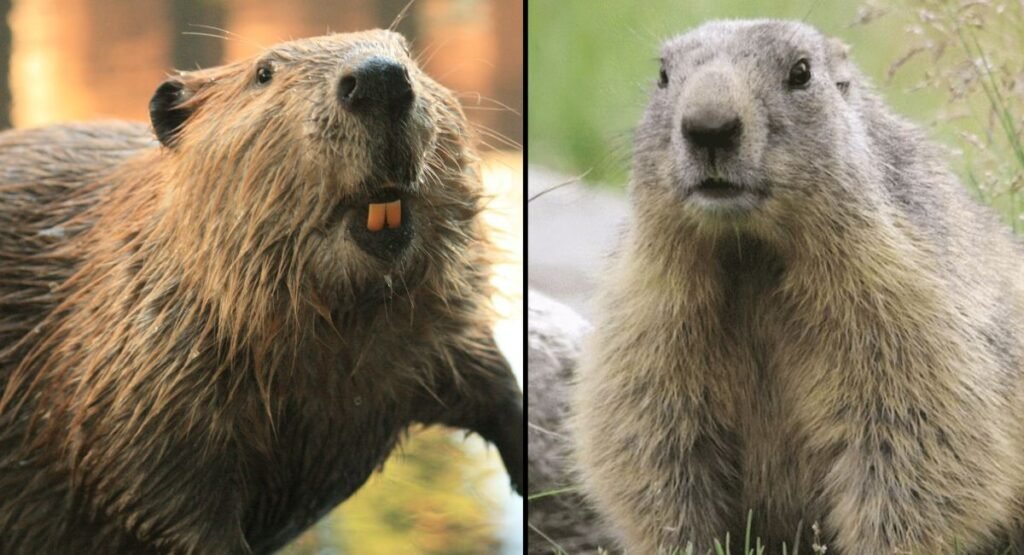
Marmots are land animals that dig burrows. Their tails are shorter and fluffier than a beaver’s, and they don’t have the same paddle tail or swimming build.
Fast field check:
- If it’s carrying sticks near water, think beaver.
- If it’s sitting upright in a meadow or vanishing into a burrow, think marmot.
Marmots Pictures: What To Photograph For A Good Id
If you’re trying to identify from photos, marmots pictures are most useful when they show a few specific angles.
Try to capture:
- The tail (shape and length)
- The face (nose and cheek color)
- The whole body in context (rocky slope, meadow, water edge)
- A side view while it’s standing or moving
Even a quick phone picture can be enough if it includes habitat. A marmot on a talus slope tells a different story than a “marmot” next to a pond.
Conclusion
The exploration of marmots in North America reveals a world of unique species and adaptations that thrive across various landscapes. From their social structures to their hibernation habits, these animals showcase the incredible resilience of wildlife in our continent.
By familiarizing ourselves with these remarkable rodents, we cultivate a deeper respect for nature and its inhabitants. Next time you find yourself in the mountains or meadows, take a moment to observe these charming creatures in their natural setting.
FAQs
What Is Another Name For A Marmot?
Marmots are known by several common names depending on the species. Popular names include groundhog, whistle pig, ground squirrel, and rock chuck. One well-known species is the yellow-bellied marmot, scientifically called Marmota flaviventris.
Is A Ferret A Marmot?
No, a ferret is not a marmot. Ferrets belong to the weasel family (Mustelidae), while marmots are large ground squirrels from the rodent family (Sciuridae).
Are There Marmots In North America?
Yes, marmots are widely found in western North America. They commonly live in alpine meadows, rocky mountains, and open grasslands, but some species also inhabit lower foothill regions where suitable burrowing habitats exist.