Top 16 Different Types of Lizards in Florida (With Pictures)
Florida boasts an astonishing variety of lizards, showcasing many different types of lizards in Florida that thrive in its warm climate. This subtropical paradise offers the perfect habitat for both native and invasive species, from agile anoles to majestic iguanas.
These reptiles not only add to Florida’s biodiversity but also play a crucial role in controlling insect populations and maintaining ecological balance. Let’s explore 16 distinct lizard species found across the Sunshine State, exploring their unique traits and behaviors.
What Types of Lizards Are in Florida?
Florida boasts a vibrant mix of both native and invasive lizard species, making it a fascinating destination for herpetology enthusiasts. Among the common groups, you’ll find anoles darting around gardens, small skinks basking in the sun, and the iconic iguanas lounging on tree branches.
Florida is home to invasive species like the green iguana and monitor lizards, which have adapted remarkably well to the warm climate. These larger reptiles often inhabit urban areas and waterways, raising concerns for local biodiversity.
Different Types of Lizards in Florida (Complete List)
| Number of Lizards | Names of Lizards of Florida |
| 1 | Eastern Fence Lizard |
| 2 | Florida Scrub Lizard |
| 3 | Green Iguana |
| 4 | Reef Gecko |
| 5 | Cuban Brown Anole |
| 6 | Six-lined Racerunner |
| 7 | Tokay Gecko |
| 8 | Green Anole |
| 9 | Florida Sand Skink |
| 10 | Knight Anole |
| 11 | Nile Monitor |
| 12 | Broadhead Skink |
| 13 | Brown Basilisk |
| 14 | Argentine Black and White Tegu |
| 15 | Mediterranean House Gecko |
| 16 | Southeastern Five-lined Skink |
Eastern Fence Lizard
The Eastern Fence Lizard (Sceloporus undulatus), belonging to the class Reptilia, is a captivating reptile primarily found throughout the forests and wooded areas of Florida. Known for their insectivore diet, these lizards play a vital role in controlling insect populations. Males stand out with their striking blue patches on their throats and bellies, creating a vibrant display during the mating season.
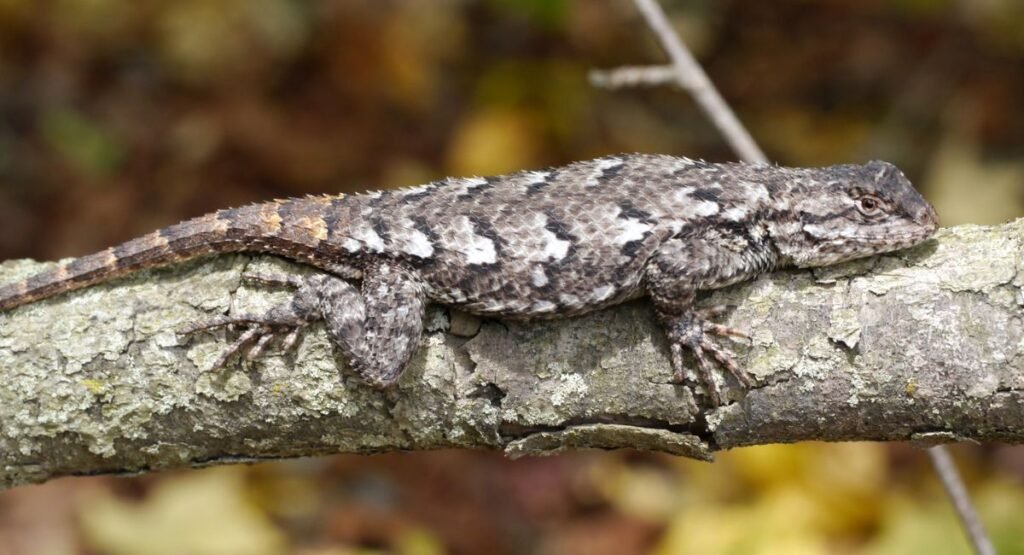
Eastern Fence Lizards are often spotted basking on fences, tree trunks, or sun-soaked rocks. Their behavior is a blend of basking and hunting, as they keenly watch for potential insect prey. This adaptable species thrives in both urban and rural environments, showcasing resilience in the face of change.
Florida Scrub Lizard
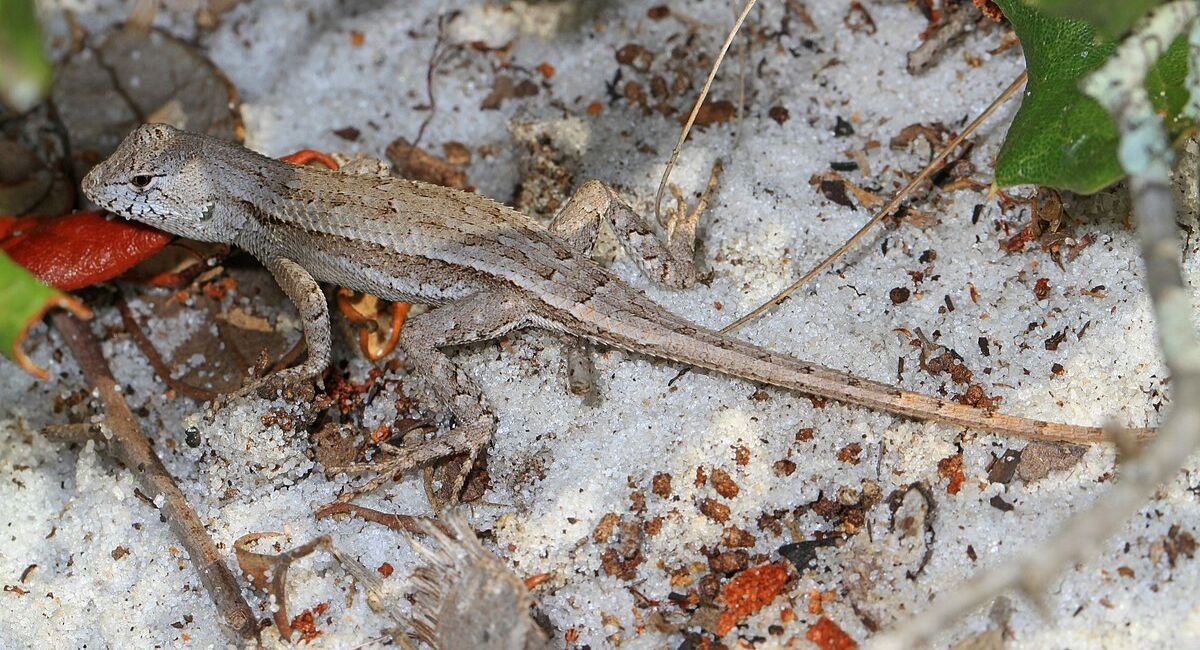
The Florida Scrub Lizard (Sceloporus woodi), belonging to the class Reptilia, primarily thrives on a diet of insects. This captivating species is intricately tied to its sandy scrub habitats, which are found predominantly in central Florida.
The conservation of the Florida Scrub Lizard is vital, given its dependence on periodic wildfires that help rejuvenate and maintain the scrub ecosystem. These fires clear out dense vegetation, allowing the lizard to thrive in the newly opened landscapes where it can hunt and bask in the sun.
With urban development and invasive species threatening its habitat, the future of this remarkable reptile hangs in the balance, highlighting the urgent need for habitat protection and restoration efforts in central Florida.
Green Iguana
The Green Iguana (Iguana iguana), classified under Reptilia, is one of the largest lizards found in Southern Florida. As herbivores, their diet primarily consists of leaves, fruits, and flowers, which they skillfully forage from the treetops.
Green Iguanas are considered an invasive species in Florida. Their feeding habits can lead to significant ecological impacts, including damage to native plant species and infrastructure, as they often dig burrows that undermine sidewalks and foundations.
Reef Gecko
The Reef Gecko (Sphaerodactylus notatus), belonging to the class Reptilia, showcases a diet primarily comprised of insects and small arthropods. These tiny lizards thrive in coastal habitats, particularly in the Florida Keys, where the warm climate and diverse ecosystem provide an ideal environment for their nocturnal lifestyle.
Active primarily at night, the Reef Gecko emerges from its hiding spots to hunt for food under the cover of darkness. This nocturnal behavior not only aids in their predatory strategies but also shields them from potential daytime threats.
Cuban Brown Anole
The Cuban Brown Anole (Anolis sagrei), a member of the class Reptilia, is primarily an insectivore, feasting on a diet rich in various insects. Commonly found throughout Florida, this lizard exhibits fascinating territorial behaviors, particularly among males.
Territorial disputes among male Anolis sagrei often involve elaborate displays, including head bobbing and push-ups, showcasing strength and vitality. Ecologically, the Cuban Brown Anole plays a significant role as both predator and prey, helping to regulate insect populations while serving as a food source for larger animals.
Six-lined Racerunner
The Six-lined Racerunner (Aspidoscelis sexlineatus), a member of the class Reptilia, thrives in sandy areas and grasslands, making it an integral part of these ecosystems. As an insectivore, their diet predominantly consists of various insects, which they capture with remarkable agility.
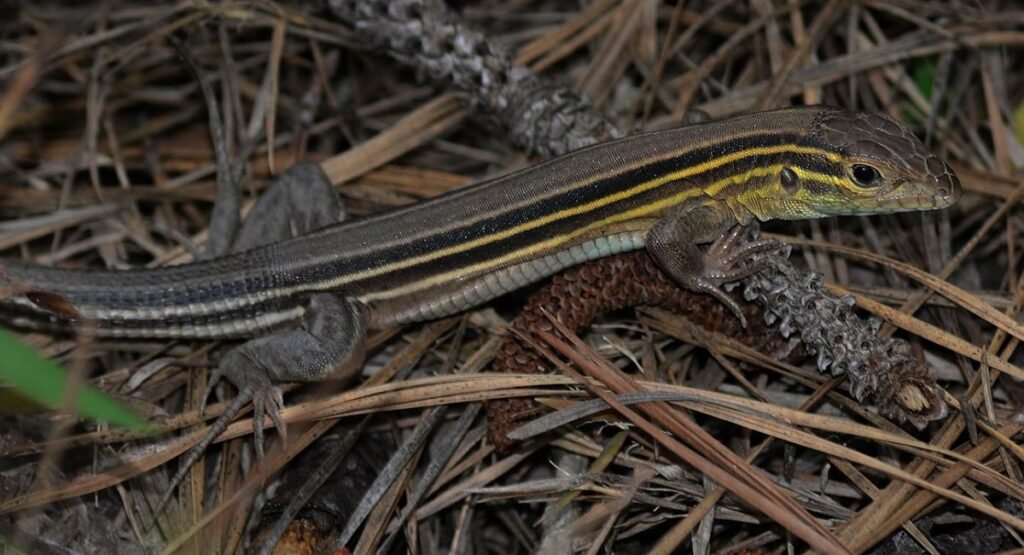
Known for their incredible speed, Six-lined Racerunners can dart across the ground at impressive rates, enabling them to evade predators and effectively hunt for food. Their streamlined bodies and elongated limbs facilitate quick movements, allowing them to navigate their habitats with ease.
Tokay Gecko
The Scientific Name of the Tokay Gecko is Gekko gecko, placing it in the Class Reptilia. As a carnivore, its diet predominantly consists of insects and small vertebrates, showcasing its predatory nature. These vibrant lizards are easily recognizable, adorned with striking blue-gray skin and vivid orange spots that contribute to their unique charm.
The Tokay Gecko is renowned for its ear-piercing call, a distinctive “tokay” that echoes through dense forests and urban locales alike. This loud vocalization serves as both a territorial declaration and a mating call, instantly marking their robust personality.
Read also Animals That Walk on Two Legs: 18 Fascinating Bipedal Animals
Green Anole
The Green Anole (Anolis carolinensis), classified under the Reptilia class and known for its insectivore diet, showcases a remarkable ability to adapt its color. These lizards can shift from vibrant green to various shades of brown, primarily as a response to stress, temperature changes, and environmental factors.
Typically found in lush gardens, trees, and shrubs across their native Florida habitat, the Green Anole thrives in areas rich with foliage. Their preference for these environments highlights their reliance on plants for shelter and hunting.
Florida Sand Skink
Plestiodon reynoldsi, belonging to the class Reptilia, is an insectivore distinctively adapted to its sandy habitat. The Florida Sand Skink excels in a burrowing lifestyle, navigating through loose sand with remarkable agility, much like a swimmer gliding through water.
Florida Sand Skink faces significant threats due to habitat loss caused by urban development and environmental changes. As a threatened species, conservation efforts are crucial to maintaining its dwindling population.
Knight Anole
The Scientific Name of the Knight Anole is Anolis equestris, placing it in the Class Reptilia. As an omnivore, its diet consists of insects, fruits, and small animals, showcasing its adaptive feeding habits. These characteristics contribute to the Knight Anole’s impressive status among Florida’s reptilian inhabitants.
Reaching lengths of up to 18 inches, Knight Anoles are the largest anole species found in the region. Their vibrant green coloration and robust build set them apart, while their behavior is equally captivating; they are often seen basking in the sun or engaging in territorial displays.
Nile Monitor
Scientific Name: Varanus niloticus, Class: Reptilia, Diet: Carnivore.
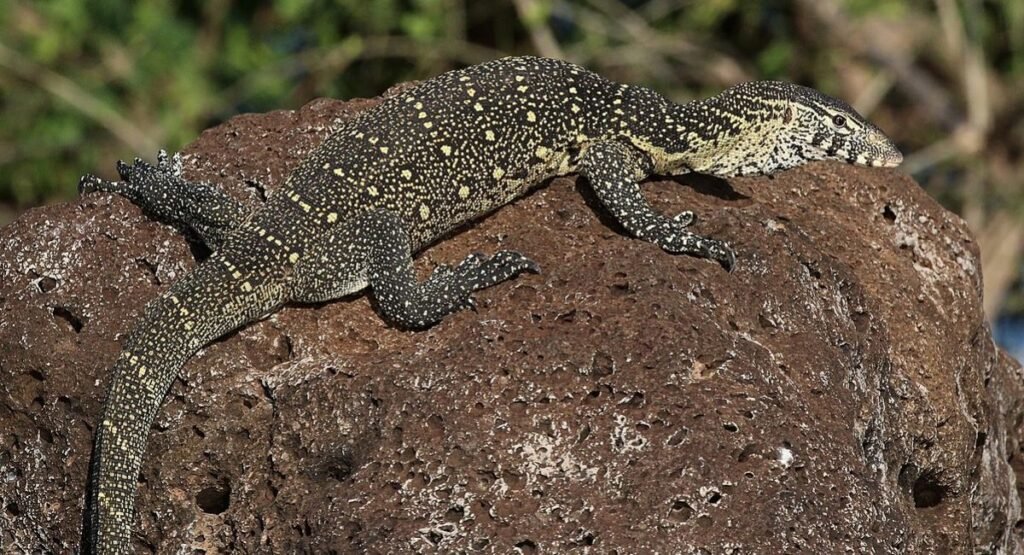
The Nile Monitor is one of the largest lizards in Africa, often reaching lengths of over six feet. These formidable reptiles wield significant ecological influence, standing at the top of the food chain in their habitats, where they skillfully hunt a variety of species, including birds, fish, eggs, and small mammals.
The Nile Monitor has emerged as an invasive species, raising concerns about their impact on local ecosystems. Their predatory nature can upset the balance, leading to declines in native bird populations and other wildlife, highlighting the importance of managing their presence to preserve local biodiversity.
Broadhead Skink
The Broadhead Skink (Plestiodon laticeps), a member of the class Reptilia, is a distinctive medium-sized lizard recognized for its robust body and striking coloration. As carnivores, these skinks primarily feast on insects, small invertebrates, and even other lizards, showcasing their adaptability in various habitats.
Visually, adult Broadhead Skinks exhibit a more subdued color palette while retaining their vivid blue tails during their juvenile stage, adding an intriguing dynamism to their appearance. Ecologically, they play a crucial role in controlling insect populations, contributing to the balance within their ecosystems and serving as both predator and prey within the food web.
Brown Basilisk
The Scientific Name of the Brown Basilisk is Basiliscus vittatus, and it belongs to the Class Reptilia. As an Omnivore, this fascinating lizard thrives on a varied diet that includes insects, fruits, and plant material, making it adaptable to different environments. It primarily inhabits the lush rainforests of Central America, where its vibrant coloration and agile movements serve as effective survival strategies.
Known colloquially as the “Jesus Christ Lizard,” the Brown Basilisk has earned this nickname due to its incredible ability to sprint across water for short distances. This remarkable adaptation allows it to evade predators and continue its pursuit of food with astonishing speed.
Argentine Black and White Tegu
The Scientific Name of the Argentine Black and White Tegu is Salvator merianae, belonging to the Class Reptilia, and boasts an omnivorous diet. These impressive lizards can exceed four feet in length and are known for their remarkable adaptability and intelligence.
As an invasive species, the Argentine Black and White Tegu poses a significant threat to local wildlife. They disrupt ecological balances by preying on the eggs and small animals of native species, thereby endangering local fauna.
Their intelligence, characterized by problem-solving skills and social behaviors, aids their survival and spread, making them a formidable competitor in any ecosystem they invade. Understanding the implications of their presence underscores the importance of conservation efforts to protect indigenous species from these adaptable reptiles.
Mediterranean House Gecko
The Mediterranean House Gecko (Hemidactylus turcicus), belonging to the class Reptilia and primarily an insectivore, thrives in warm environments. These small, agile reptiles are often seen scuttling along walls, especially around outdoor lights where insects are attracted in droves.
Commonly found across southern Europe, North Africa, and parts of the Middle East, the Mediterranean House Gecko has adapted well to urban life. They can be seen basking on walls or darting into crevices, showcasing their incredible climbing abilities.
Southeastern Five-lined Skink
The Southeastern Five-lined Skink (Plestiodon inexpectatus), belonging to the class Reptilia, is a fascinating creature known for its insectivore diet. Often spotted in gardens and forests, these skinks are a delight for nature enthusiasts due to their striking appearance.
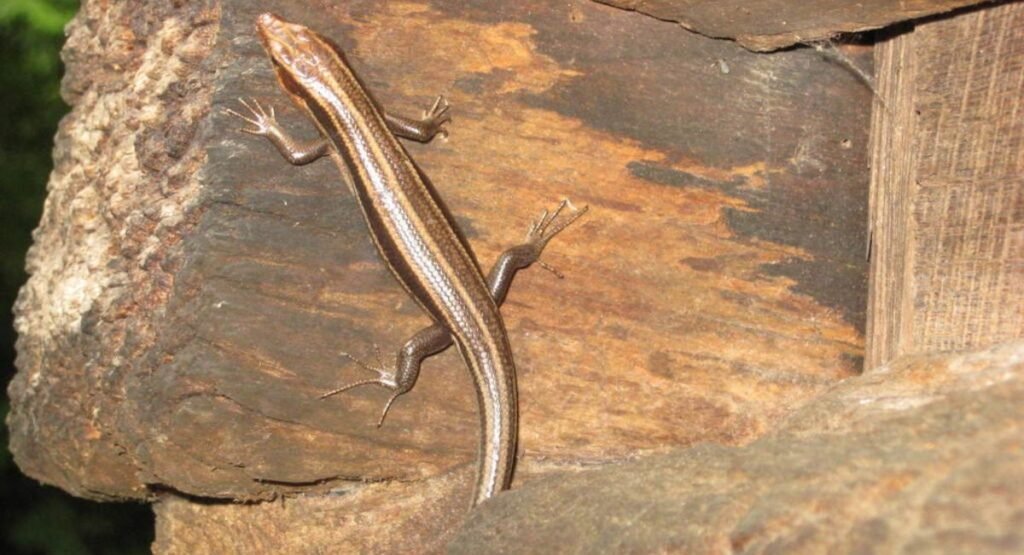
Their bodies are adorned with five vivid stripes that run seamlessly from head to tail, creating a stunning contrast against their smooth scales. Juveniles are particularly captivating, showcasing a vibrant blue tail that fades as they mature, adding to their charm and uniqueness in the reptilian community.
Conclusion
The different types of lizards in Florida showcase the incredible biodiversity of the state’s reptile population. These fascinating creatures play a vital role in our ecosystems, particularly by controlling insect populations and promoting a healthy environment.
Understanding the various species not only enhances our appreciation for Florida’s wildlife but also underscores the importance of conservation efforts to protect these lizards and their habitats. By fostering awareness about their ecological significance, we can encourage responsible stewardship of our natural resources.
FAQs
What Is The Largest Lizard In Florida?
The Nile Monitor is one of the largest lizards found in Florida. This invasive reptile can grow over 6 feet long and is known for its strength, swimming ability, and predatory behavior.
What Is The Cutest Lizard?
The Crested Gecko is often considered one of the cutest lizards in the world because of its tiny body, large eyes, and frog-like toes. Its curled tail and tree-climbing behavior also make it especially charming.
What Are The Common Lizards In Florida?
Some common lizards in Florida include the Asian Flat-tailed House Gecko, Mediterranean House Gecko, Green Iguana, and Northern Curlytail Lizard. These species are frequently seen in urban areas, gardens, and coastal habitats.