Slow Animals: What Animals Are Slow and Why Being Slow Works
Slow Animals inhabit a unique corner of the animal kingdom, thriving where speed often dominates the narrative. While the fast and furious typically steal the spotlight, these creatures demonstrate that slowness can be a formidable advantage.
By conserving energy, evading predators, and adapting to specific diets, slow animals carve out niches that showcase the diversity of survival strategies in nature. In this article, I will explore the intriguing world of slow-moving species, their fascinating adaptations, and the reasons why being slow can be an evolutionary triumph.
Why Some Animals Are Slow On Purpose
Slowness usually comes with a trade. Animals that move slowly often invest in other defenses: camouflage, armor, toxins, thick skin, or a lifestyle that avoids danger. Many slow animals also eat food that’s low in calories or hard to digest, so sprinting everywhere would be like trying to run a marathon on salad.
Temperature matters too. Cold-blooded animals tend to be slower when it’s cool because their muscles depend on external heat. Warm-blooded animals can be slow for different reasons, especially if they’ve evolved to conserve energy.
Cold-Blooded Animals Slow Down When It’s Cool
A lot of “slow” sightings are seasonal. Reptiles and amphibians rely on external heat, so a turtle, snake, or lizard can look dramatically slower on a cool morning than it would on a warm afternoon. That doesn’t mean the animal is always slow; it means its muscles are running on a different thermostat. This is why you’ll see reptiles basking: they’re literally powering up.
Slow Can Be A Defense Strategy
Some animals benefit from moving slowly because it keeps them hidden. Slow lorises, for example, move with careful, deliberate motions that help them blend into branches at night. Others rely on armor (tortoises), toxins (some amphibians), or a tough body plan that makes speed less necessary. In those cases, slowness isn’t a weakness it’s part of a whole survival package.
Read also Vultures in Michigan: Turkey Vultures, Black Vultures, and the “Buzzard” Confusion
The Slow Animal In The World Depends On Your Definition
If you’re talking about the slowest measured movement, some marine creatures like certain starfish and snails creep along at speeds that barely register. If you’re talking about a slow land mammal that people can recognize, sloths usually take the crown in everyday conversation. The key is to compare like with like: a starfish isn’t built to run, so its “speed” is a different category than a mammal’s.
Famous Slow Animals And What Makes Them Tick
Three-Toed Sloths
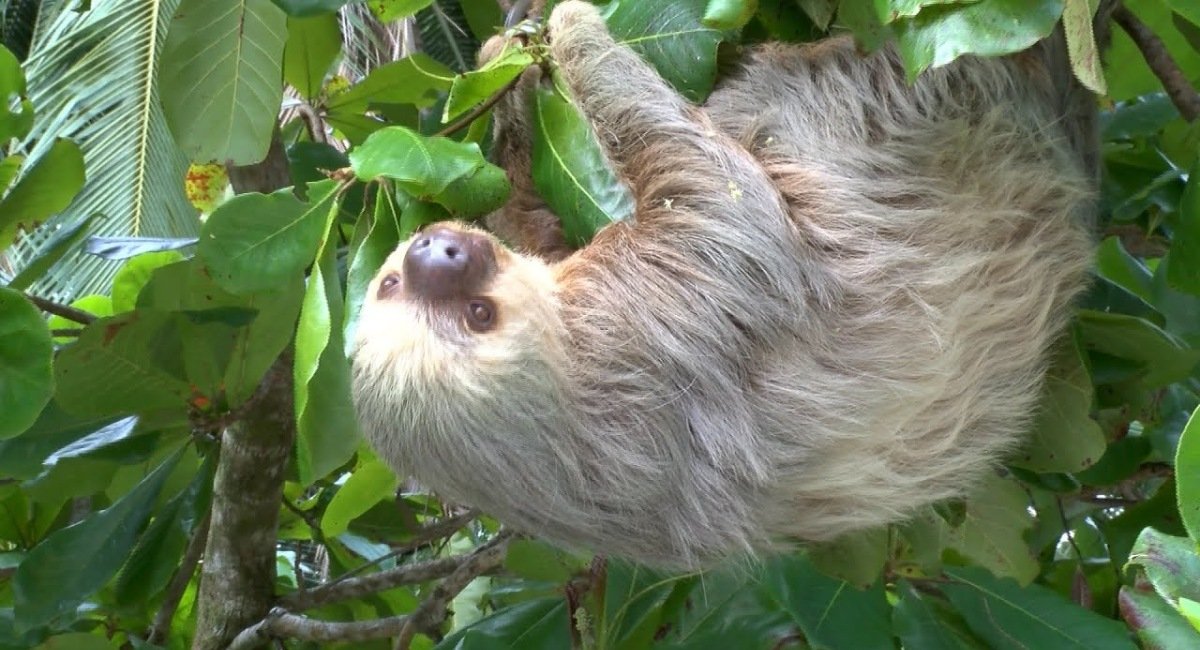
Sloths are the iconic slow animals. Their low-energy lifestyle matches a leaf-heavy diet that doesn’t provide quick fuel. They also benefit from being hard to notice: slow movement doesn’t trigger predator attention the way sudden motion does. Add algae-tinted fur that blends into the canopy, and you get an animal that survives by being quiet, steady, and unbothered.
Galápagos Tortoises And Other Giant Tortoises
Tortoises are slow, but they’re also durable. Their shell is a serious defense, and their metabolism is built for a long, steady life. A tortoise doesn’t need to sprint away from danger as often because it carries protection with it. Their pace also fits environments where food is sparse and water can be seasonal.
Manatees
Manatees look like they’re drifting, and in a way they are. They’re large herbivores that spend a lot of time grazing on aquatic plants. Their movement is gentle and efficient, suited for warm, calm waters. They can move faster if they need to, but their default mode is slow and steady.
Seahorses
Seahorses are often cited as among the slowest fish. Their body shape is built for camouflage and maneuvering among sea grass, not for speed. They use a small dorsal fin that flutters to move, which is efficient for short distances but not built for fast travel.
Starfish and snails
If you want truly extreme animals slow enough to make sloths look speedy, starfish and snails are in the conversation. They move by gripping and releasing surfaces with tube feet (starfish) or gliding on muscular waves over mucus (snails). It’s slow, but it’s strong and steady and for an animal that eats sessile prey or plants, it works.
Slow Doesn’t Mean Weak
A lot of people assume slow animals are helpless. But many are surprisingly tough. A tortoise can be slow and still outlast you. A manatee can be gentle and still be massively strong. Even a snail can survive harsh conditions by sealing itself up and waiting.
Slowness often pairs with endurance. Some animals that look lazy are actually excellent at conserving energy and surviving long periods with limited resources. That’s a different kind of athleticism.
How to think about “slow animals” in real life
When you hear “animals slow,” it helps to ask what the animal is optimizing for. If it’s optimizing for camouflage, slow makes sense. If it’s optimizing for energy conservation, slow makes sense. If it’s optimizing for surviving predators with armor or toxins, slow makes sense. Once you think in trade-offs, slowness stops looking like a flaw and starts looking like a strategy.
Conclusion
Slow animal creatures navigate their environments with a deliberate grace, emphasizing that life’s journey can be just as fulfilling when taken at a leisurely pace. Their adaptations not only highlight their unique positions within ecosystems but also challenge our modern notions of success and productivity.
By honoring the slow animals around us, we gain a broader understanding of nature’s intricacies and the value of diversity. Let’s commit to observing these fascinating beings, allowing their slow rhythms to inspire us toward mindful living.