15 Biggest Jellyfish In The World You Won’t Believe Exist
The biggest jellyfish in the world can grow to astonishing sizes, captivating both scientists and ocean enthusiasts alike. These majestic creatures, often measuring several feet in diameter, are not only a spectacle of natural beauty but also play a crucial role in maintaining the delicate balance of marine ecosystems.
Ranging from the tranquil depths of the Pacific to the vibrant coastlines of the Atlantic, these giants inhabit a variety of ocean habitats. Let’s explore the top 15 biggest jellyfish species globally, showcasing their stunning images and shedding light on their importance in our oceans.
What Is The Biggest Jellyfish In The World?
The Lion Mane Jellyfish holds the title for what is the biggest jellyfish in the world, boasting tentacles that can stretch over 100 feet long. This mesmerizing marine creature is not just a sight to behold but also plays a crucial role in its ecosystem, serving as both predator and prey.
Its unique bell shape and long tentacles contribute to its status as a captivating wonder in the ocean, making it a subject of interest for researchers and ocean enthusiasts alike.
List of Biggest Jellyfish In The World
| No. | Largest Jellyfish Species in the World |
|---|---|
| 1 | Upside-Down Jellyfish |
| 2 | Lion’s Mane Jellyfish (Largest Jellyfish in the World) |
| 3 | Nomura’s Jellyfish |
| 4 | Moon Jellyfish |
| 5 | Flower Hat Jelly |
| 6 | Barrel Jellyfish |
| 7 | Blue Blubber Jellyfish |
| 8 | Cauliflower Jellyfish |
| 9 | Atlantic Sea Nettle |
| 10 | Fried Egg Jellyfish |
| 11 | Giant Phantom Jelly |
| 12 | Box Jellyfish (Deadliest Jellyfish) |
| 13 | Pacific Sea Nettle |
| 14 | Australian Spotted Jellyfish |
| 15 | Black Sea Nettle |
Upside-Down Jellyfish
The Upside-Down Jellyfish, scientifically known as Cassiopea andromeda, belongs to the Class Scyphozoa and the Family Cassiopeidae. Found predominantly in the warm waters of the Indo-Pacific and Caribbean, this jellyfish displays a remarkable adaptation by resting on its bell, facing the sky. This unique posture not only aids in feeding but also maximizes its exposure to sunlight.
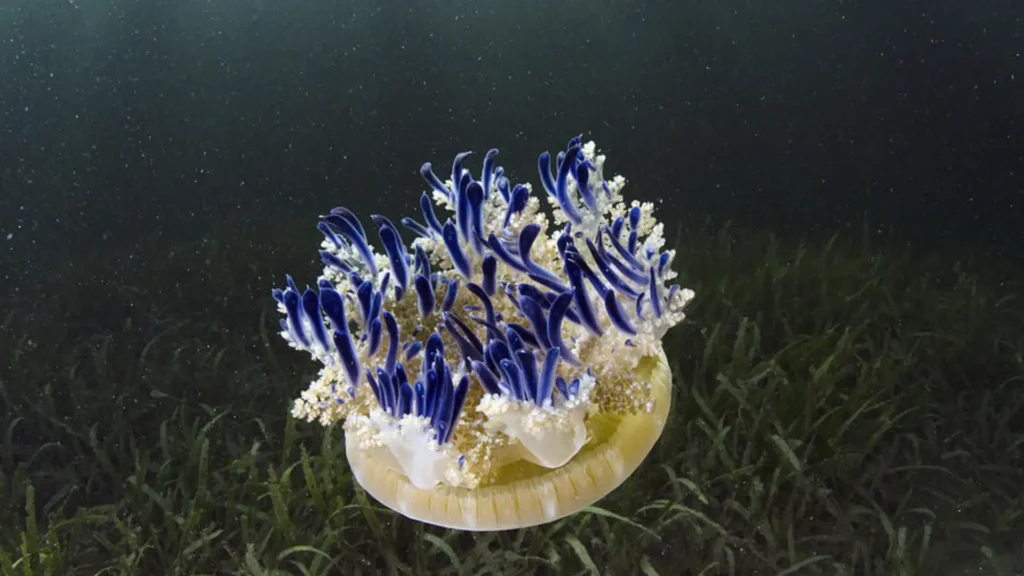
Engaging in a fascinating symbiotic relationship with algae, the Upside-Down Jellyfish plays a vital role in its ecosystem. The algae reside within its tissues, utilizing sunlight for photosynthesis to produce energy, which in turn benefits the jellyfish.
Lion’s Mane Jellyfish (Largest Jellyfish In The World)
The Lion’s Mane Jellyfish, scientifically known as Cyanea capillata, belongs to the class Scyphozoa and the family Cyaneidae. This remarkable creature thrives in the Arctic and other cold ocean waters, showcasing its stunning beauty and unique adaptations.
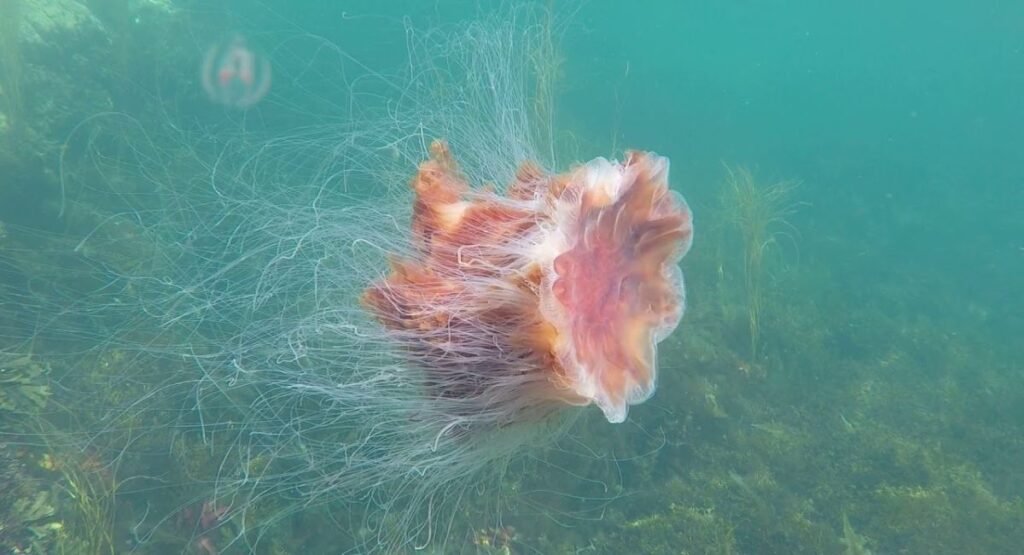
Its tentacles tell a captivating story of their own, stretching an astounding 120 feet, making them the longest of any living creature. These long, trailing appendages not only enhance the jellyfish’s ghostly appearance but also serve crucial roles in its survival and hunting strategies.
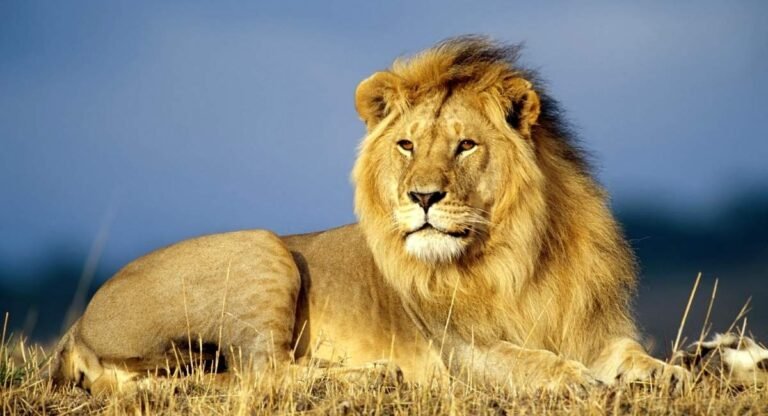
Its flowing, hair-like tentacles are reminiscent of the dramatic manes found in other species, joining a select group of animals that have manes known for these striking natural adornments. This shared trait across land and sea highlights how nature repeats its most dramatic designs.
Nomura’s Jellyfish
Nomura’s Jellyfish, scientifically known as Nemopilema nomurai, belongs to the class Scyphozoa within the family Rhizostomatidae. Thriving primarily in the waters of the Northwest Pacific Ocean, these jellyfish can weigh over 200 kilograms and boast a bell diameter that can reach 2 meters.
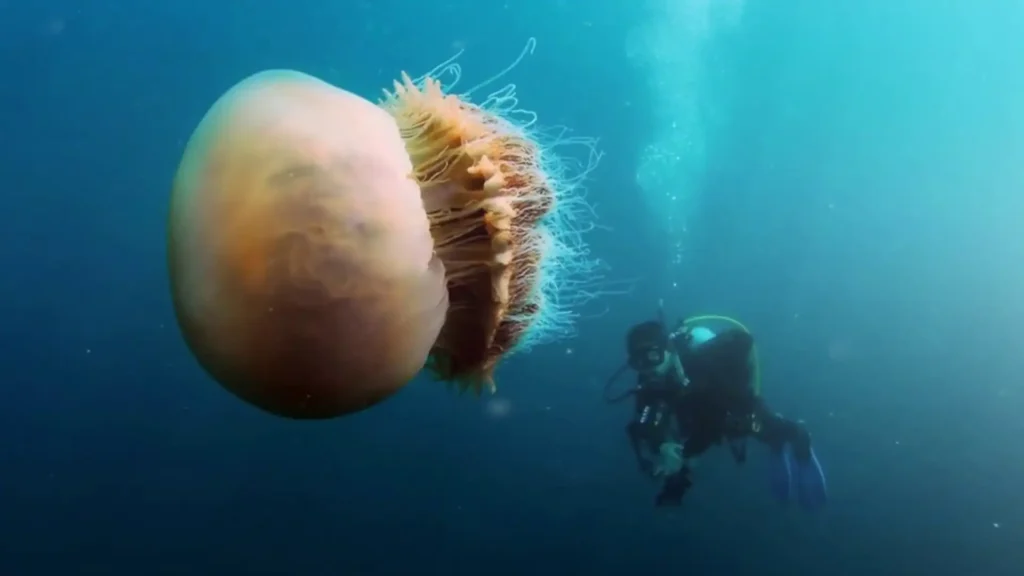
The proliferation of Nomura’s Jellyfish in ocean blooms has significant repercussions for local fishing industries, as these gelatinous giants compete for food resources and often clog nets.
Climate change plays a crucial role in this phenomenon, with warmer waters and altered currents facilitating their expansion. These massive blooms reflect a broader pattern seen among animals that live in groups, where sheer numbers offer both survival advantages and ecological challenges.
Moon Jellyfish
The Moon Jellyfish, scientifically known as Aurelia aurita, belongs to the Class Scyphozoa and the Family Ulmaridae. This mesmerizing creature thrives in both coastal and open ocean environments, showcasing a transparent, gelatinous body that can typically reach up to 40 centimeters in diameter.
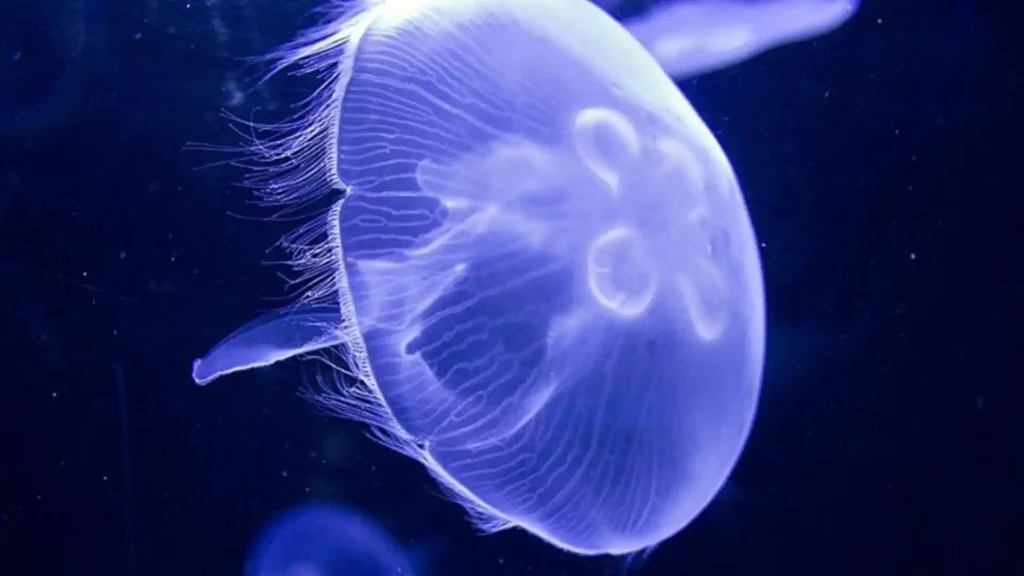
Beyond their enchanting appearance, Moon Jellyfish play a pivotal role in the marine ecosystem. They serve as both predator and prey, significantly impacting the populations of plankton and small fish while providing sustenance for larger marine animals such as sea turtles.
Found in oceans worldwide, their global presence highlights their adaptability and resilience, making them a vital indicator of ocean health. Observing these luminous creatures inspires awe and reminds us of the delicate balance within our underwater world.
Their slow, drifting movement through the water column is characteristic of many slow animals that rely on patience and efficiency rather than speed to survive. This unhurried pace is part of what makes Moon Jellyfish so mesmerizing to observe.
Flower Hat Jelly
The Flower Hat Jelly, scientifically known as Olindias formosus, belongs to the Class Hydrozoa and the Family Olindiidae. Found primarily in the warm tropical waters of the Pacific Ocean, this vibrant jellyfish captivates with its striking colors, adorned like a living piece of art.
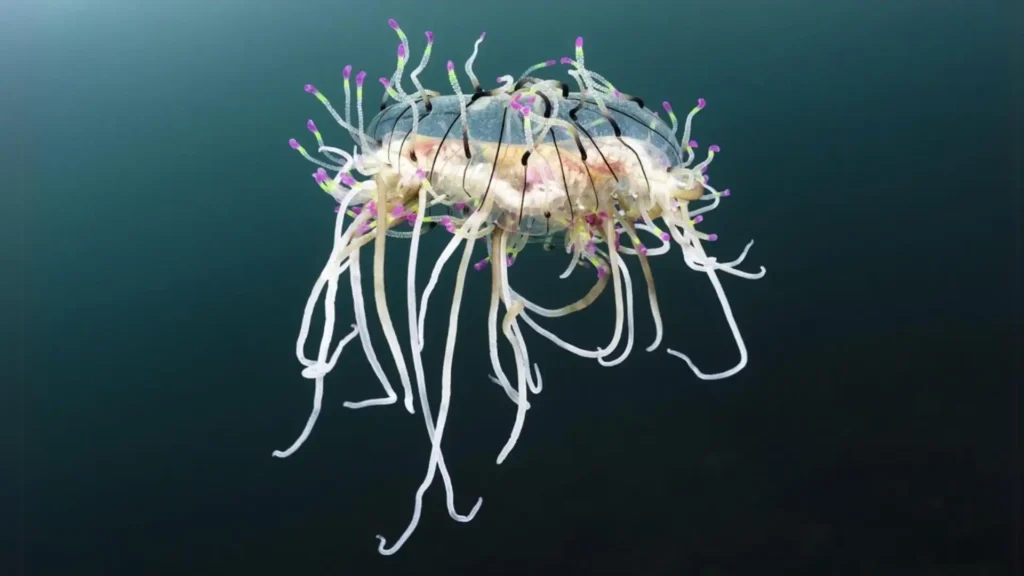
This jellyfish adeptly employs its tentacles to stun small prey with a mild sting, allowing it to capture food efficiently. While the sting is not harmful to humans, it serves as an important reminder of the diverse and intricate relationships in the ocean ecosystem, showcasing the balance between beauty and predation in nature.
Barrel Jellyfish
The Barrel Jellyfish, scientifically known as Rhizostoma pulmo, belongs to the class Scyphozoa and the family Rhizostomatidae. Typically found in the warm, shallow waters of the Atlantic and Mediterranean Sea, this fascinating creature boasts a distinctive barrel-shaped bell that can reach up to 90 centimeters in diameter, making it one of the largest jellyfish in Europe.
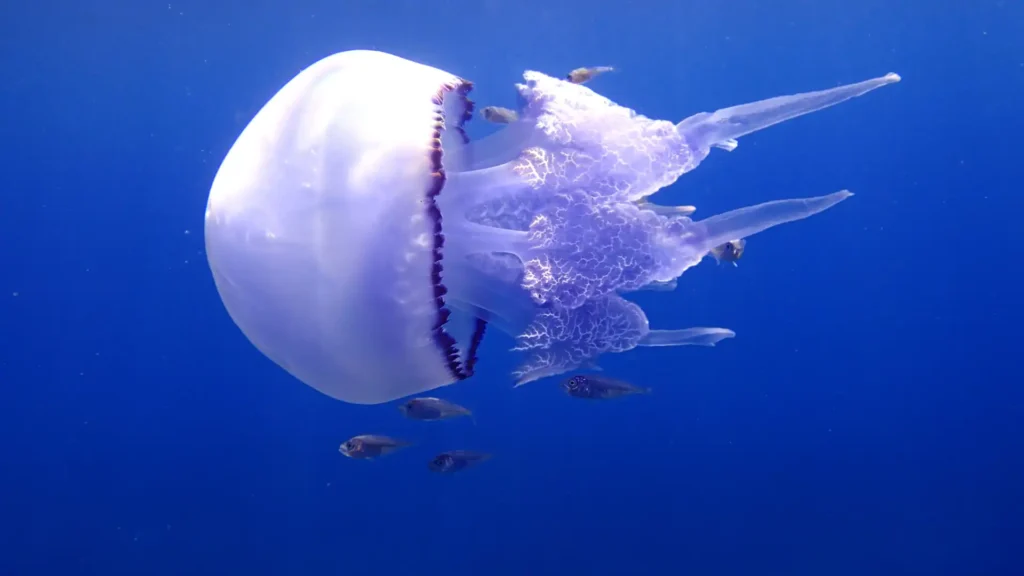
In the intricate web of marine ecosystems, the Barrel Jellyfish plays a vital role as prey for various ocean animals, including sunfish and leatherback sea turtles. Its abundance not only contributes to the diet of these magnificent creatures but also serves as a critical component in maintaining ecological balance.
Blue Blubber Jellyfish
The Blue Blubber Jellyfish, scientifically known as Catostylus mosaicus, belongs to the class Scyphozoa and the family Catostylidae. Found predominantly in the warm coastal waters of Australia, these jellyfish are captivating with their translucent, blue-hued bodies that can exhibit shades of purple under certain light conditions.
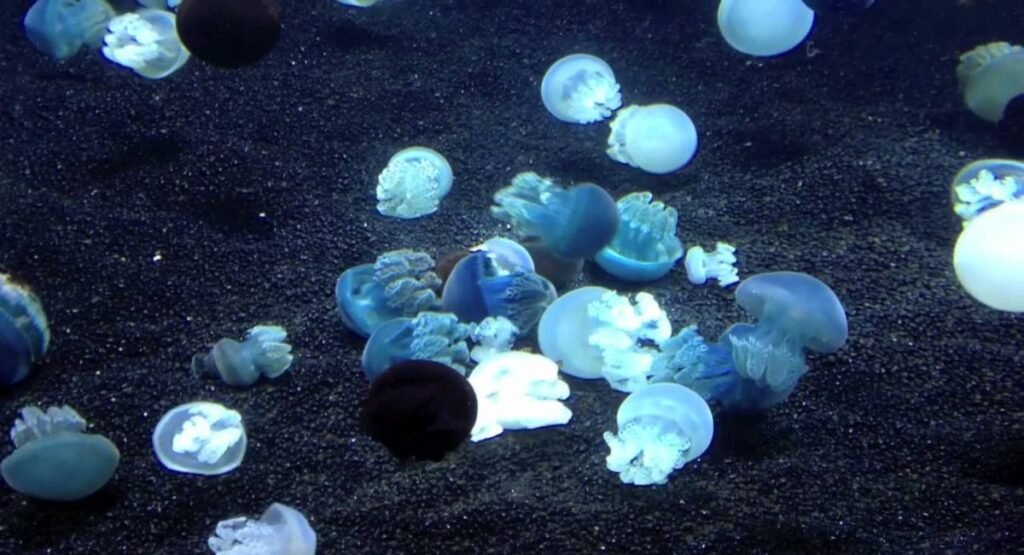
Adaptable and resilient, the Blue Blubber Jellyfish thrives in diverse environments, showcasing a remarkable ability to survive in fluctuating salinity and temperature levels. While their sting is generally mild and not dangerous to humans, recent medical research has begun exploring the potential of their venom for therapeutic applications.
Cauliflower Jellyfish
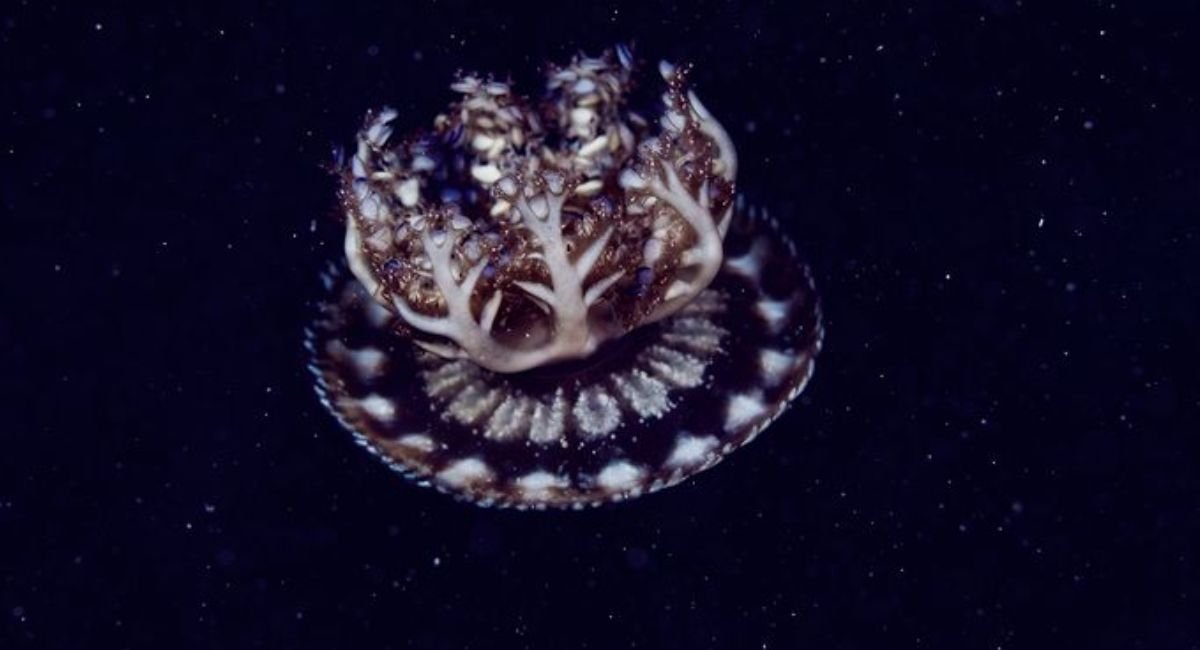
The Cauliflower Jellyfish, scientifically known as Cephea cephea, belongs to the class Scyphozoa and the family Cepheidae. This fascinating jellyfish thrives in the tranquil environments of lagoon habitats, where it drifts gracefully amidst the vibrant underwater scenery. Its unique appearance, resembling a cauliflower, adds to the charm of shallow marine ecosystems.
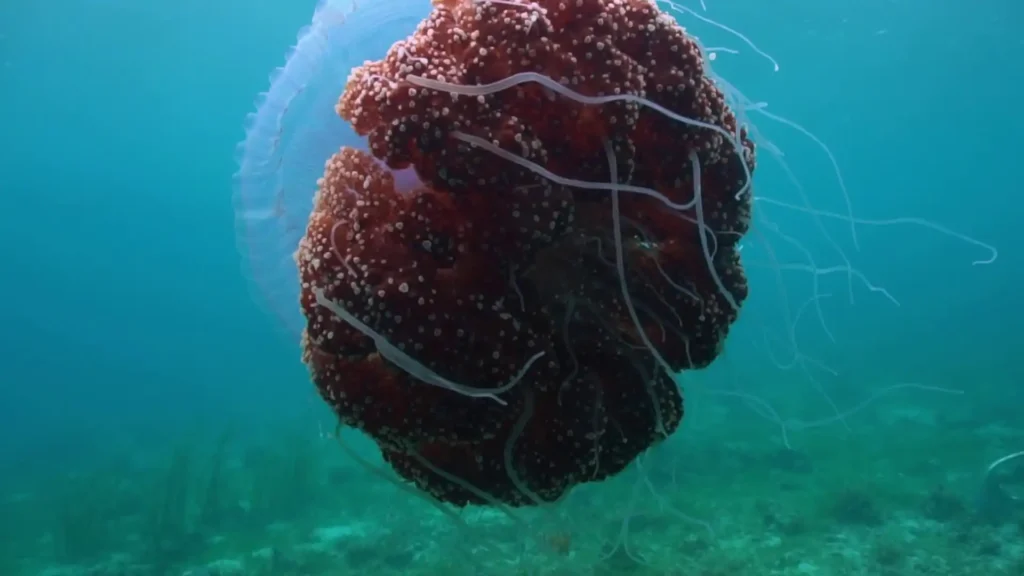
A striking aspect of the Cauliflower Jellyfish is its symbiotic relationship with algae. The algae reside within the jellyfish’s tissues, providing essential nutrients through photosynthesis while benefiting from the jellyfish’s protection.
Atlantic Sea Nettle
The Atlantic Sea Nettle, scientifically known as Chrysaora quinquecirrha, belongs to the class Scyphozoa and the family Pelagiidae. Found predominantly in the warm coastal waters of the Atlantic Ocean, this jellyfish thrives in estuaries and bays, utilizing its unique habitat to flourish.
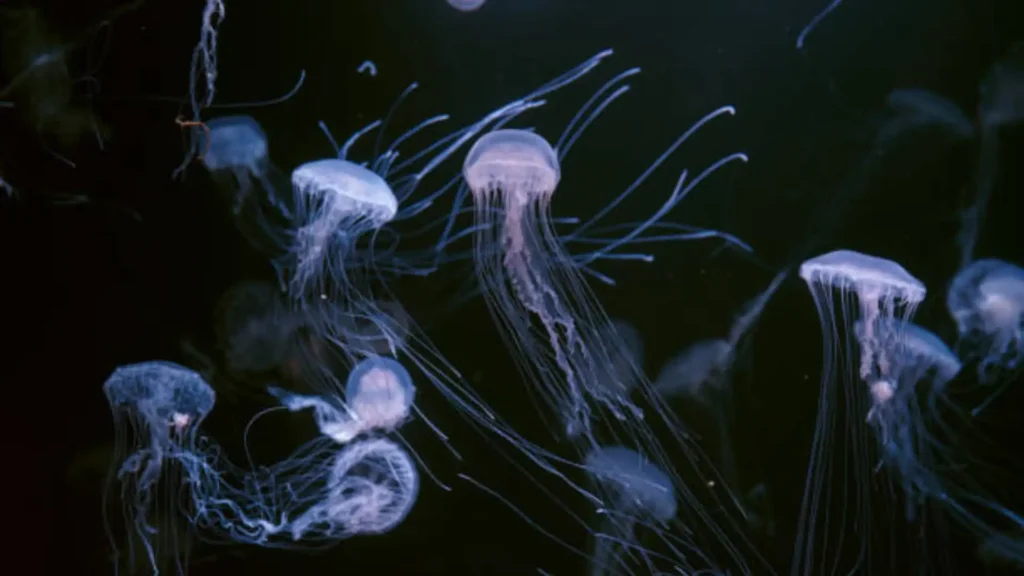
With a gelatinous bell that can reach up to 12 inches in diameter, it boasts long, trailing tentacles that can extend several feet, creating a mesmerizing sight in the water.
The tentacles of the Atlantic Sea Nettle are equipped with specialized cells called cnidocytes, which house stinging cells capable of delivering a painful sting to unsuspecting prey. This venom is primarily used to immobilize small fish and zooplankton, showcasing the species’ pivotal role in the aquatic food web.
Fried Egg Jellyfish
The Fried Egg Jellyfish, scientifically known as Cotylorhiza tuberculata, belongs to the class Scyphozoa and the family Cepheidae. Typically found in the warm, shallow waters of the Mediterranean and the Caribbean, its unique egg-like appearance is characterized by a translucent, dome-shaped bell with a vibrant yellowish or white center, resembling a fried egg.
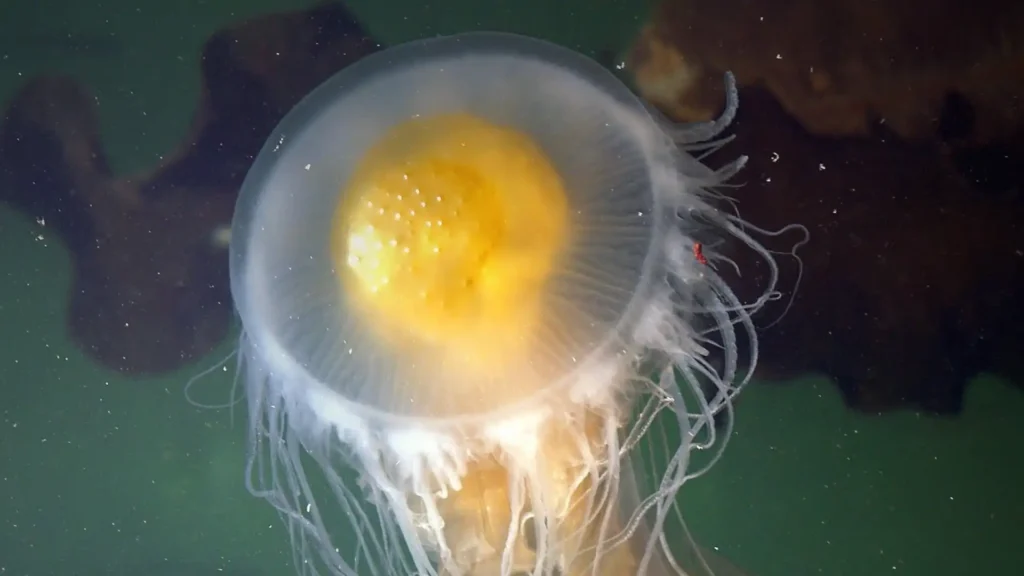
Fried Egg Jellyfish exhibits bioluminescence, emitting a soft glow that can mesmerize onlookers in the dark depths of the sea. While it may appear inviting, this species possesses a mild sting, which is typically harmless to humans but can deter small predators.
Giant Phantom Jelly
The Giant Phantom Jelly, known scientifically as Stygiomedusa gigantea, belongs to the class Scyphozoa within the family Ulmaridae. This elusive creature thrives in the dark, frigid depths of the ocean, typically found at depths ranging from 2,000 to 5,000 feet. Its translucent body, often ghostly in appearance, adds an aura of mystery to its burrowed habitat, presenting a mesmerizing spectacle rarely witnessed by human eyes.
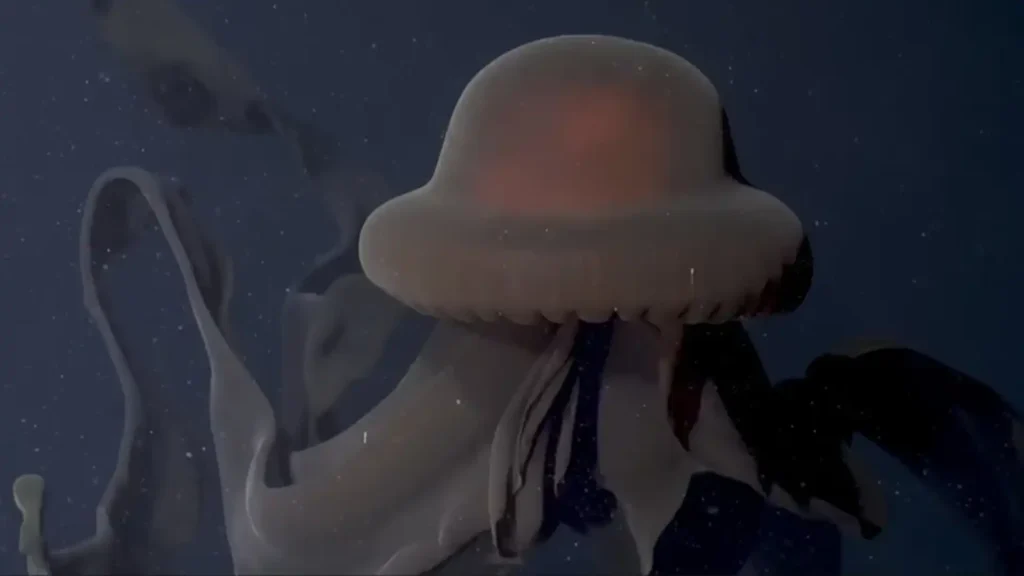
Rare sightings of the Giant Phantom Jelly only heighten its allure, with many deep-sea explorers eager to catch a glimpse of this enigmatic creature. What makes this jelly truly captivating is its bioluminescent qualities, which allow it to emit a soft glow in the darkness of the ocean floor.
Box Jellyfish (Deadliest Jellyfish)
Chironex fleckeri, commonly known as the Box Jellyfish (deadliest jellyfish), belongs to the Class Cubozoa and the Family Chirodropidae. Found predominantly in the warm coastal waters of Northern Australia and parts of Southeast Asia, these gelatinous predators thrive in shallow waters, posing a significant threat to unsuspecting swimmers.
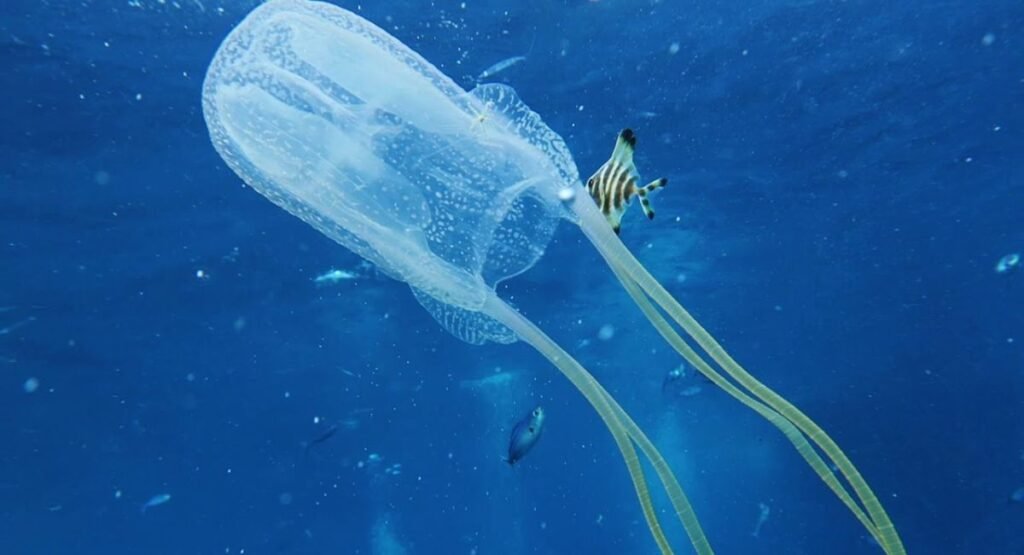
The venom of the Box Jellyfish is among the most potent in the animal kingdom, delivering a powerful sting that can cause excruciating pain and even cardiac arrest. The neurotoxins present in its venom attack the nervous system, leading to immediate medical emergencies if stung. This places the Box Jellyfish firmly among the deadliest animals in the world, a distinction earned through its uniquely fast-acting and potent venom. Few marine creatures pose as immediate a threat to human safety.
Pacific Sea Nettle
The Pacific Sea Nettle, scientifically known as Chrysaora fuscescens, belongs to the class Scyphozoa and the family Pelagiidae. Thriving in the nutrient-rich waters of the Pacific Ocean, this jellyfish is both majestic and mysterious, often found along the coasts of California and Washington, where it plays a crucial role in the marine ecosystem.
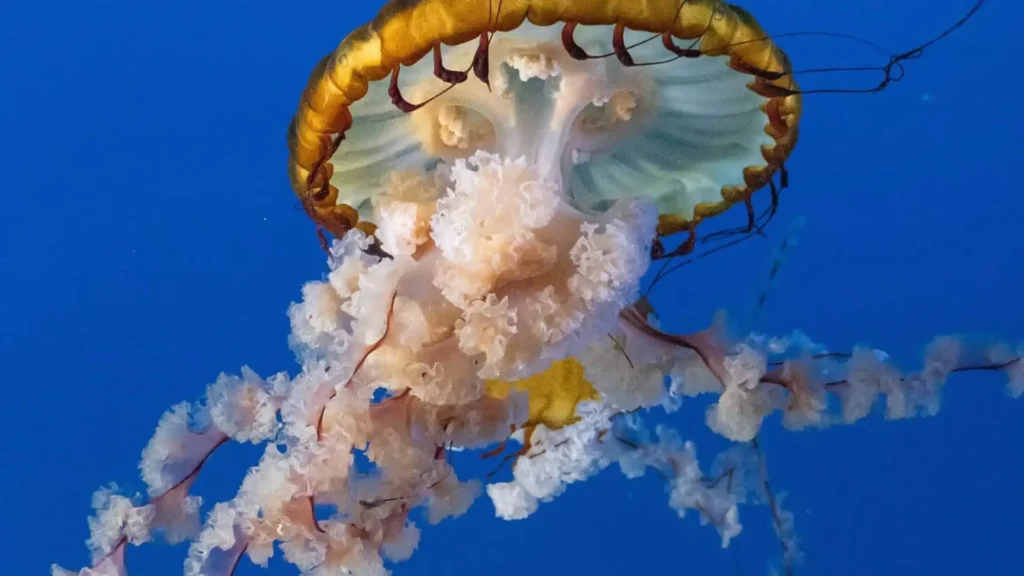
The lifecycle of the Pacific Sea Nettle is a fascinating journey that involves both a polyp and medusa stage. As a medusa, it floats gracefully through the water, feeding on small fish and plankton using its long, stinging tentacles to capture prey.
Australian Spotted Jellyfish
The Australian Spotted Jellyfish, scientifically known as Phyllorhiza punctata, belongs to the Class Scyphozoa and the Family Mastigiidae. Native to the warm coastal waters of Australia and the Indo-Pacific, this striking jellyfish can grow up to 60 centimeters (24 inches) in diameter.
Its translucent bell is decorated with bright white spots, making it one of the most recognizable jellyfish species in the ocean. This distinctive patterning places it alongside other animals with spots, where such markings often serve purposes ranging from camouflage to species recognition. In the jellyfish’s case, the spots add to its unmistakable presence in coastal waters.
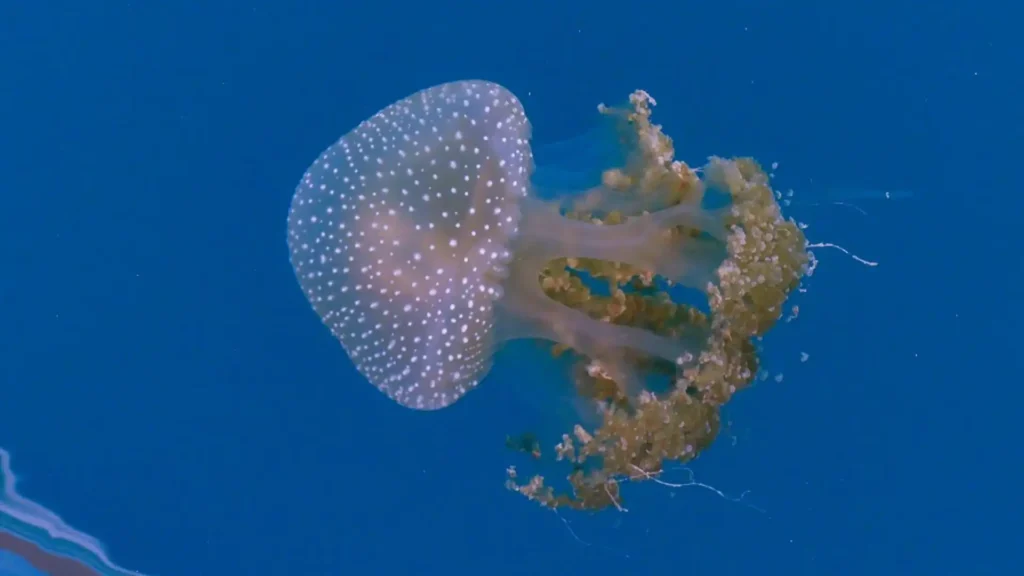
Despite its impressive size, the Australian Spotted Jellyfish has only a mild sting and feeds mainly on plankton and microscopic marine organisms. It has spread to other parts of the world, including the Gulf of Mexico, where large blooms can affect local marine ecosystems. Its graceful appearance and unique spotted pattern make it one of the most fascinating large jellyfish in the world.
Black Sea Nettle
The Black Sea Nettle, scientifically known as Chrysaora achlyos, belongs to the Class Scyphozoa and the Family Pelagiidae. Found primarily in the eastern Pacific Ocean along the coast of California, this enormous jellyfish features a dark purple to black bell that can reach 1 meter (3 feet) across, while its long tentacles may extend over 7 meters (23 feet) in length.
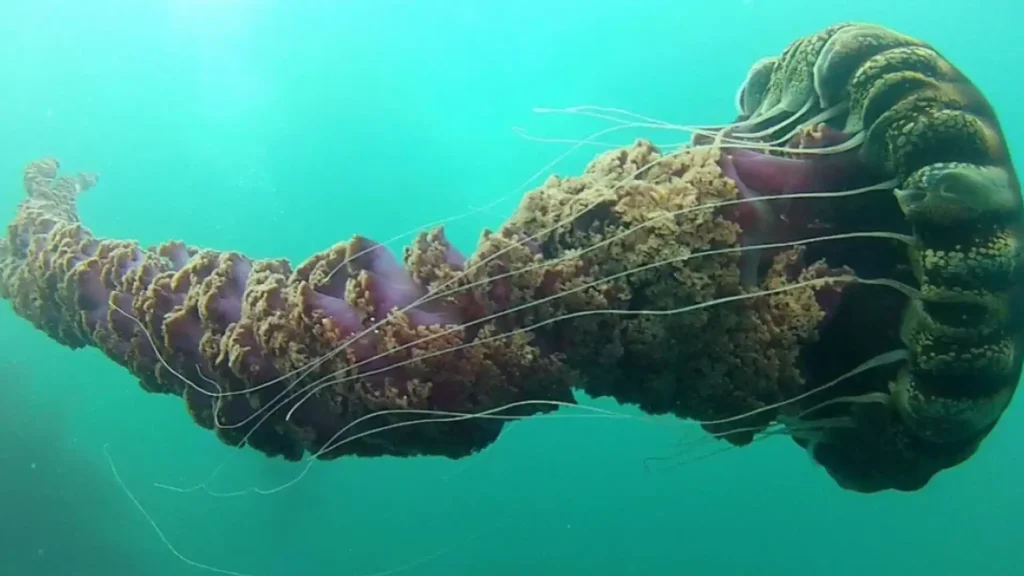
Known for its dramatic appearance, the Black Sea Nettle is one of the largest sea nettles ever recorded. It uses its long, venomous tentacles to capture fish, zooplankton, and other small marine animals.
Conclusion
The exploration of the biggest jellyfish in the world reveals a fascinating blend of beauty and danger, showcasing nature’s artistry alongside its untamed power. These colossal creatures play a crucial role in their ecosystems, serving as both predators and prey within the marine food web.
While their stunning forms may captivate our imagination, the potential hazards they pose to humans cannot be ignored. As we continue to study and appreciate these remarkable organisms, we must also commit to safeguarding the marine environments that allow them to thrive.
FAQs
Which Animal Is Without Blood?
Animals like jellyfish, corals, sponges, and flatworms have no blood; they rely on water flow or diffusion to transport oxygen and nutrients throughout their bodies.
Is There a Jellyfish Bigger Than a Blue Whale?
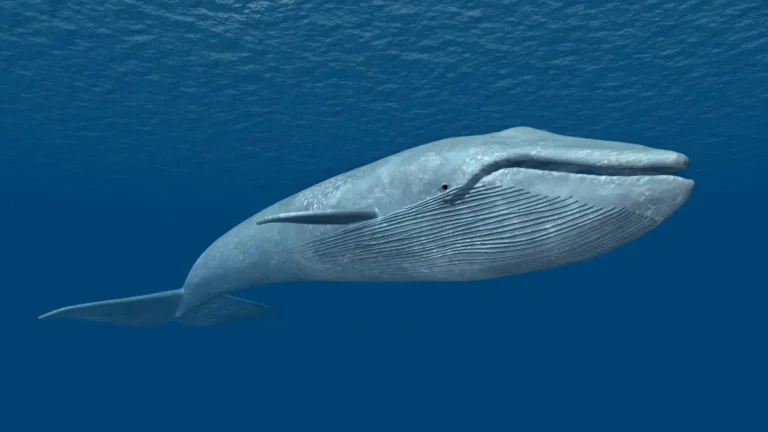
No. Although the Lion’s Mane Jellyfish has tentacles longer than a blue whale, the Blue Whale is far larger in overall body size, weight, and mass.
What Creature Is 98% Water?
Most jellyfish are made up of 95–98% water, making them one of the most water-rich creatures in the animal kingdom.
How Dangerous Is a Lion’s Mane Jellyfish?
A Lion’s Mane Jellyfish can deliver a painful sting that causes burning, swelling, and skin irritation, but it is rarely fatal and most healthy people recover with proper treatment.
What Is the Largest Jellyfish Ever Recorded?
The Lion’s Mane Jellyfish (Cyanea capillata) is the largest jellyfish ever recorded, with tentacles reaching over 120 feet (36.6 meters), making it one of the longest animals on Earth.